Introduction
Artificial Intelligence (AI) is no longer a futuristic concept—it has become an essential part of modern digital marketing. Businesses of every size are using AI-powered tools to improve customer experiences, automate repetitive tasks, analyze data, and create more personalized marketing campaigns. As technology continues to evolve, AI is shaping the future of digital marketing by making strategies smarter, faster, and more effective.
In this article, we’ll explore how AI is transforming digital marketing, its key benefits, emerging trends, and how businesses can prepare for an AI-driven future.
What Is AI in Digital Marketing?
Artificial Intelligence in digital marketing refers to the use of machine learning, natural language processing (NLP), predictive analytics, and automation to improve marketing performance. AI helps marketers collect and analyze large volumes of data, understand customer behavior, and make informed decisions with greater accuracy.
Instead of relying only on manual efforts, businesses can use AI to automate workflows, personalize customer interactions, and optimize campaigns in real time.
Why AI Is Becoming Essential
The digital world generates enormous amounts of customer data every day. AI enables marketers to process this information quickly and uncover valuable insights that would be difficult to identify manually.
Businesses that adopt AI can:
- Improve customer engagement
- Increase marketing efficiency
- Reduce operational costs
- Make data-driven decisions
- Deliver personalized experiences at scale
How AI Is Transforming Digital Marketing
1. Personalized Customer Experiences
AI analyzes customer preferences, browsing history, and purchasing behavior to deliver personalized recommendations.
Examples include:
- Product recommendations
- Personalized emails
- Customized website content
- Individualized advertisements
This level of personalization improves customer satisfaction and increases conversion rates.
2. AI-Powered Content Creation
AI tools can assist marketers by generating:
- Blog outlines
- Social media captions
- Email campaigns
- Product descriptions
- SEO suggestions
While human creativity remains essential, AI significantly speeds up content production and improves productivity.
3. Smarter SEO Strategies
AI has transformed search engine optimization by helping marketers:
- Discover high-performing keywords
- Analyze competitors
- Improve content quality
- Optimize on-page SEO
- Predict search trends
AI-powered SEO tools help businesses create content that better matches user intent and search engine requirements.
4. Chatbots and Virtual Assistants
AI-powered chatbots provide instant customer support 24/7 by answering common questions, assisting with purchases, and resolving basic issues.
Benefits include:
- Faster response times
- Improved customer satisfaction
- Lower support costs
- Increased lead generation
5. Predictive Analytics
AI analyzes historical data to predict future customer behavior.
Businesses can forecast:
- Customer purchases
- Churn probability
- Product demand
- Marketing campaign performance
Predictive analytics helps marketers make smarter strategic decisions.
6. Marketing Automation
AI automates repetitive marketing tasks, including:
- Email marketing
- Lead nurturing
- Customer segmentation
- Campaign scheduling
- Performance reporting
Automation allows marketing teams to focus on creativity and strategy rather than routine tasks.
7. Better Advertising Performance
AI improves digital advertising by automatically optimizing:
- Audience targeting
- Ad placements
- Budget allocation
- Bid strategies
- Creative testing
This results in higher return on investment (ROI) and improved campaign performance.
8. Voice Search Optimization
As voice assistants become more popular, AI helps businesses optimize content for conversational searches.
Marketers are increasingly focusing on:
- Long-tail keywords
- Natural language queries
- Featured snippets
- Local SEO
Voice search is expected to play an even larger role in future digital marketing strategies.
9. Customer Journey Analysis
AI tracks customer interactions across multiple channels, providing marketers with a complete understanding of the customer journey.
This helps businesses identify:
- Customer pain points
- Conversion opportunities
- Drop-off stages
- High-performing channels
These insights enable continuous optimization of marketing campaigns.
Benefits of AI in Digital Marketing
The biggest advantages include:
- Improved decision-making through data analysis
- Enhanced customer personalization
- Faster campaign execution
- Better customer engagement
- Increased efficiency
- Higher conversion rates
- Cost savings through automation
- Improved return on marketing investment
Challenges of AI in Digital Marketing
Despite its benefits, AI also presents challenges:
- Data privacy concerns
- High implementation costs for some businesses
- Dependence on quality data
- Ethical considerations
- Need for skilled professionals
- Maintaining a balance between automation and human creativity
Businesses should use AI responsibly while ensuring transparency and protecting customer data.
Future Trends of AI in Digital Marketing
The future of AI will continue to reshape marketing through:
- Hyper-personalized customer experiences
- Advanced predictive analytics
- AI-generated videos and visuals
- Smarter marketing automation
- Conversational AI assistants
- Real-time customer insights
- Enhanced voice and visual search
- AI-powered customer service
Companies that embrace these innovations will gain a significant competitive advantage.
Best Practices for Businesses
To successfully adopt AI in digital marketing:
- Invest in quality customer data.
- Combine AI with human creativity.
- Focus on customer privacy and ethical AI usage.
- Continuously monitor AI-generated results.
- Train marketing teams to work with AI-powered tools.
- Start with small AI projects before scaling.
Conclusion
Artificial Intelligence is transforming the future of digital marketing by making campaigns more personalized, data-driven, and efficient. From content creation and SEO to predictive analytics and marketing automation, AI enables businesses to reach the right audience with the right message at the right time.
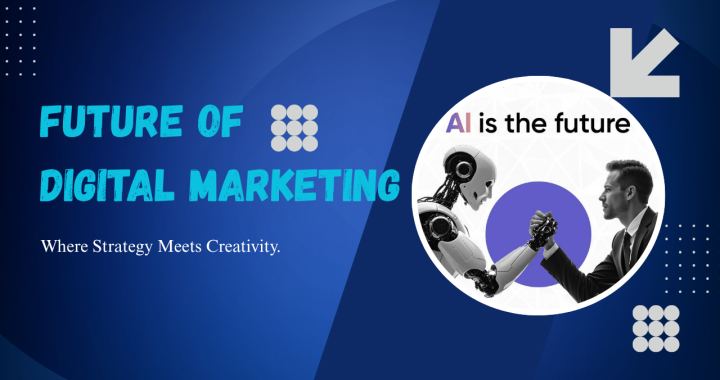
While AI will continue to evolve, it should be viewed as a tool that enhances—not replaces—human creativity and strategic thinking. Businesses that embrace AI responsibly and combine it with innovative marketing strategies will be well-positioned for long-term success in an increasingly competitive digital landscape.
Frequently Asked Questions (FAQs)
1. What is AI in digital marketing?
AI in digital marketing uses technologies like machine learning and automation to improve marketing strategies, analyze customer data, and personalize user experiences.
2. How does AI improve SEO?
AI helps identify keywords, optimize content, analyze competitors, and understand user intent, leading to better search engine rankings.
3. Can AI replace digital marketers?
No. AI automates repetitive tasks and provides insights, but human creativity, strategy, and decision-making remain essential.
4. What are the biggest benefits of AI in marketing?
Personalization, automation, predictive analytics, improved customer engagement, and higher marketing ROI are among the biggest advantages.
5. What is the future of AI in digital marketing?
The future includes smarter automation, hyper-personalization, conversational AI, predictive marketing, AI-generated content, and more intelligent customer experiences.