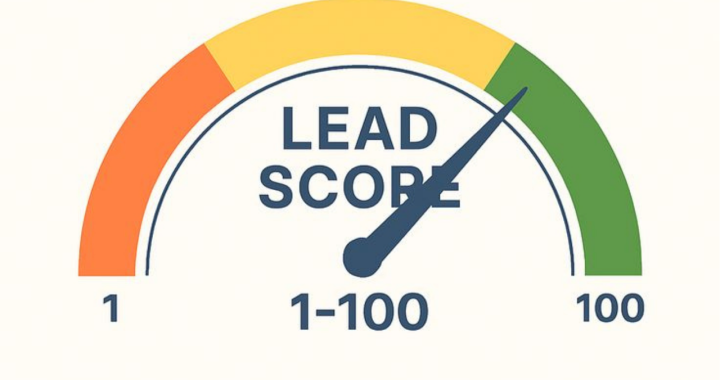
What Is Lead Scoring and Why Is It Important?
Generating leads is only the first step in the sales process. Not every lead is equally valuable—some are ready to make a purchase, while others are simply exploring their options. This is where lead scoring becomes essential. It helps businesses identify which leads are most likely to convert into customers, allowing sales and marketing teams to focus their efforts where they matter most.
In today’s competitive digital landscape, lead scoring is a key strategy for improving sales efficiency, increasing conversion rates, and maximizing return on investment (ROI). In this article, you’ll learn what lead scoring is, how it works, why it’s important, and the best practices for using it effectively.
What Is Lead Scoring?
Lead scoring is the process of assigning points or values to potential customers based on their likelihood of becoming paying customers. These scores are calculated using various factors, including demographic information, online behavior, engagement with marketing content, and purchase intent.
The higher a lead’s score, the more likely they are to be interested in your products or services. This helps businesses prioritize high-quality leads instead of treating every prospect the same.
For example:
- A visitor who downloads an eBook may receive 10 points.
- Someone who subscribes to your newsletter may earn 15 points.
- A person who requests a product demo could receive 50 points.
- An existing customer looking for an upgrade may receive an even higher score.
Once a lead reaches a predefined score, it can be passed to the sales team for follow-up.
How Does Lead Scoring Work?
Lead scoring combines customer data with predefined scoring rules. Businesses decide which actions or characteristics indicate stronger buying intent and assign points accordingly.
Common scoring factors include:
1. Demographic Information
Businesses often score leads based on details such as:
- Job title
- Industry
- Company size
- Location
- Annual revenue
If your target audience is marketing managers in medium-sized businesses, leads matching that profile will receive higher scores.
2. Website Behavior
Website activity provides valuable insights into customer interest.
Examples include:
- Visiting pricing pages
- Reading multiple blog posts
- Downloading guides
- Spending more time on important pages
- Returning to the website several times
These actions often indicate that a visitor is actively researching your solution.
3. Email Engagement
Lead scoring also considers how prospects interact with your email campaigns.
Businesses may assign points for:
- Opening emails
- Clicking links
- Downloading resources
- Replying to emails
- Registering for webinars
Higher engagement usually means stronger interest.
4. Content Interaction
People who consume educational content often move further through the buying journey.
Activities such as watching videos, downloading whitepapers, attending webinars, or reading case studies can increase a lead’s score.
5. Purchase Intent
Some behaviors clearly indicate buying intent, such as:
- Requesting a quote
- Booking a consultation
- Starting a free trial
- Filling out a contact form
- Asking about pricing
These actions typically receive the highest scores because they suggest the lead is close to making a decision.
Why Is Lead Scoring Important?
1. Improves Sales Efficiency
Without lead scoring, sales teams may spend valuable time contacting people who have little interest in buying.
Lead scoring helps representatives focus on prospects who are genuinely interested, improving productivity and increasing the chances of closing deals.
2. Increases Conversion Rates
By prioritizing high-quality leads, businesses can respond more quickly to interested prospects.
Fast follow-ups often result in higher conversion rates because customers receive assistance while their interest is still high.
3. Better Marketing Performance
Lead scoring helps marketers understand which campaigns generate the most valuable leads.
Instead of measuring only the number of leads, businesses can evaluate lead quality and invest more in successful marketing channels.
4. Stronger Sales and Marketing Alignment
Sales and marketing teams often have different goals.
Lead scoring creates a shared definition of what qualifies as a “sales-ready” lead. This improves communication, reduces misunderstandings, and creates a smoother customer journey.
5. Higher Return on Investment (ROI)
Marketing budgets are limited.
Lead scoring ensures businesses spend their resources on attracting and nurturing prospects who are most likely to convert, leading to better ROI.
Traditional vs. AI-Powered Lead Scoring
Many businesses now use Artificial Intelligence (AI) to improve lead scoring.
Traditional Lead Scoring
- Uses manually created scoring rules.
- Requires regular updates.
- Depends on human assumptions.
- Works well for smaller businesses.
AI-Powered Lead Scoring
- Analyzes large amounts of customer data automatically.
- Learns from past conversions.
- Predicts future buying behavior.
- Continuously improves scoring accuracy.
AI-powered systems help businesses identify patterns that manual scoring may miss, making lead qualification faster and more reliable.
Best Practices for Effective Lead Scoring
To get the most value from lead scoring, businesses should follow these best practices:
- Define your ideal customer profile (ICP).
- Score both demographic details and behavioral actions.
- Regularly review and update scoring rules.
- Use CRM and marketing automation tools to automate scoring.
- Work closely with sales and marketing teams to define what makes a lead “qualified.”
- Monitor conversion data and adjust scores based on real results.
Lead scoring should evolve as customer behavior and market conditions change.
Common Lead Scoring Mistakes
Avoid these common errors:
- Giving too much importance to one activity, such as opening an email.
- Ignoring negative signals, like unsubscribing or long periods of inactivity.
- Never updating scoring criteria.
- Treating all industries or customer types the same.
- Passing leads to sales before they are truly ready.
A balanced scoring system produces better results than one based on a few isolated actions.
The Future of Lead Scoring
Lead scoring is becoming smarter with advances in AI and predictive analytics. Future systems will analyze customer intent in real time, identify buying signals across multiple channels, and automatically adjust scores based on changing behavior.
Businesses that embrace intelligent lead scoring will be better equipped to deliver personalized experiences, shorten sales cycles, and improve customer satisfaction.
Conclusion
Lead scoring is one of the most effective ways to improve lead generation and sales performance. By assigning scores based on customer characteristics and behavior, businesses can identify their most promising prospects, focus sales efforts, and increase conversion rates.
Whether you use a simple manual system or an advanced AI-powered platform, lead scoring helps your team work more efficiently and make better marketing decisions. In today’s competitive business environment, it’s no longer just a helpful strategy—it’s an essential part of successful lead management.