Artificial Intelligence (AI) is transforming the way people create, publish, and consume content. Content creation has traditionally required writers, designers, video editors, photographers, marketers, and other creative professionals. Today, AI-powered tools can assist with many of these activities, making the content creation process faster and more efficient.
From writing blog posts and social media captions to generating images, editing videos, and creating marketing ideas, AI is becoming an important part of the modern content industry. As AI technology continues to improve, its role in content creation will become even more significant. However, the future will not necessarily be about AI replacing human creators. Instead, it will be about humans and AI working together to produce better, more relevant, and more engaging content.
Faster Content Creation
One of the biggest ways AI will change content creation is by making the process faster. Creating high-quality content can take hours or even days. Writers need to research topics, create outlines, write drafts, edit their work, and optimize content for different audiences.
AI can assist with many of these tasks. A creator can provide a topic and ask an AI tool to generate ideas, headlines, outlines, or a first draft. This gives creators a starting point and reduces the time required to begin a project.
For example, a digital marketer preparing a blog about social media marketing can use AI to generate potential topics and organize them into a content plan. The marketer can then add personal experience, research, examples, and a unique perspective.
This makes AI a useful productivity tool rather than simply a content generator.
AI Will Improve Content Ideas
Coming up with fresh content ideas can be challenging, especially for creators who publish frequently. AI can analyze topics, audience interests, search trends, and previous content to suggest new ideas.
A business could use AI to generate blog topics, social media posts, video concepts, email campaigns, and frequently asked questions based on its industry.
For example, a digital marketing agency could ask AI for content ideas related to SEO, Google Ads, social media marketing, email marketing, and web development.
AI can help creators overcome writer’s block and maintain a consistent flow of ideas.
However, creators should not blindly publish every AI-generated idea. Human judgment is still necessary to determine whether an idea is useful, original, and relevant to the target audience.
AI and Blog Writing
Blogging is one of the areas most affected by AI. AI can assist with research, outlines, introductions, headings, summaries, and drafts.
This can make the writing process easier for beginners and experienced writers. Instead of spending a long time deciding how to structure an article, a writer can use AI to create a basic structure and then develop it further.
AI can also help identify readability problems, grammar mistakes, repetitive phrases, and unclear sentences.
However, high-quality blogging still requires human involvement. Readers want useful information, original opinions, real examples, and trustworthy explanations. Simply publishing generic AI-generated articles may not provide enough value.
The best approach is to use AI for assistance while keeping human research, experience, and editing at the center of the process.
AI Will Transform Social Media Content
Social media requires a constant supply of content. Businesses and creators need captions, images, short videos, stories, advertisements, and other formats to remain active.
AI can help generate social media content more efficiently. It can suggest captions, hashtags, post ideas, video scripts, and content calendars.
A single idea can also be adapted for different platforms. For example, a long blog article could become a LinkedIn post, Instagram caption, short-video script, and email newsletter.
This allows creators to reuse their ideas without simply copying the same content everywhere.
AI can also help analyze engagement data and identify which types of content perform best. This can help creators make better decisions about future posts.
AI-Generated Images and Visual Content
AI is also changing visual content creation. Traditionally, creating professional images required photography equipment, graphic design skills, or professional designers.
Modern AI tools can generate visual concepts from text descriptions and assist designers with editing and creative development.
Businesses can use AI to create initial concepts for advertisements, social media graphics, product visuals, and promotional materials.
This can reduce production time and make visual content more accessible to small businesses.
However, businesses should consider copyright, licensing, brand identity, and authenticity when using AI-generated visuals. Human designers can provide creative direction and ensure that the final visuals accurately represent the brand.
AI and Video Creation
Video content is becoming increasingly important across digital platforms. Creating videos can require scripting, filming, editing, voiceovers, captions, and visual effects.
AI can assist with several parts of this process. It can help generate scripts, create subtitles, remove unwanted sections, improve audio, suggest edits, and assist with other production tasks.
For creators who have limited editing experience, these tools can reduce technical barriers.
In the future, creators may be able to start with a simple idea and use AI to create a preliminary video that can then be edited and personalized by a human.
This could make professional-looking video content easier and faster to produce.
Personalized Content
Another major change will be the growth of personalized content. Different audiences have different interests, preferences, and needs.
AI can analyze audience information and help creators produce content for specific groups.
For example, an online education company could create different versions of an advertisement for students, professionals, and business owners. Each version could focus on the benefits most relevant to that particular audience.
Personalization can make content more relevant and improve audience engagement.
However, businesses must use customer information responsibly and respect privacy.
AI Will Improve Content Optimization
Creating content is only one part of content marketing. Creators also need to make sure their content reaches the right audience.
AI can help with content optimization by analyzing factors such as keywords, audience behavior, engagement patterns, readability, and performance data.
For example, AI can suggest improvements to a blog’s structure or identify topics that may be relevant to an audience.
In social media marketing, AI can help analyze which content formats and topics generate stronger engagement.
This means content creation will become increasingly connected to data and performance analysis.
The Role of Human Creativity
Despite rapid AI development, human creativity will remain extremely important.
AI can generate text, images, ideas, and other content, but human creators provide personal experiences, emotions, opinions, storytelling, cultural understanding, and originality.
Audiences can often recognize when content feels generic or repetitive. A successful creator needs to give content a unique voice and perspective.
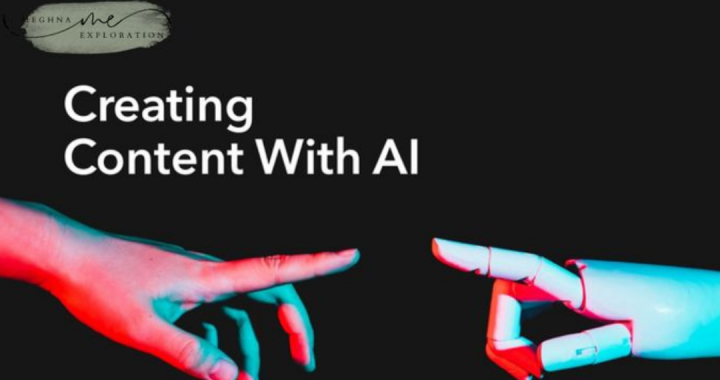
For this reason, the future of content creation is likely to involve collaboration between humans and AI.
AI can handle repetitive and time-consuming tasks while humans focus on creative direction, strategy, storytelling, and quality control.
Challenges of AI Content Creation
AI also creates several challenges. One major concern is the production of low-quality content. If businesses publish large amounts of automatically generated material without reviewing it, audiences may become frustrated with repetitive information.
Accuracy is another issue. AI can sometimes produce incorrect or misleading information. Content creators should verify important facts before publishing.
There are also concerns about originality, copyright, privacy, and responsible use of AI-generated content.
Businesses should establish clear guidelines for how AI is used and ensure that humans remain responsible for the final content.
The Future of Content Creation
The future of content creation will likely be more automated, personalized, and data-driven. AI will become an everyday assistant for writers, marketers, designers, video creators, and businesses.
Creators may use AI to research topics, generate ideas, create drafts, produce visuals, edit videos, analyze performance, and optimize content.
This could allow individuals and small businesses to compete with larger organizations that traditionally had access to bigger creative teams.
However, the value of content will still depend on quality. AI can make content creation faster, but speed alone does not guarantee success.
Creators who combine AI tools with original ideas, expertise, research, and human storytelling will likely have a stronger advantage.
Conclusion
AI is changing content creation by making it faster, more accessible, personalized, and efficient. It can assist with writing, blogging, social media, image generation, video production, research, and content optimization.
However, AI should not be viewed as a complete replacement for human creators. Creativity, emotional intelligence, originality, experience, and strategic thinking remain essential qualities in successful content.
The future will be about humans and AI working together. AI can handle repetitive tasks and provide powerful creative assistance, while humans provide the ideas, personality, judgment, and authenticity that make content meaningful.
As AI technology continues to evolve, content creators who learn how to use these tools responsibly and creatively will be better prepared for the future of digital content. The biggest opportunity is not simply to create more content, but to use AI to create better content that provides real value to audiences.