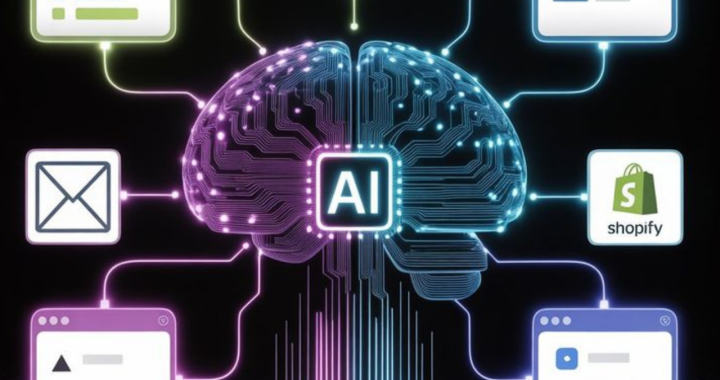
The Future of Artificial Intelligence: How AI Is Transforming Our World in 2026
Artificial Intelligence (AI) is no longer a futuristic concept—it has become a part of our everyday lives. From voice assistants like Siri and Google Assistant to personalized recommendations on Netflix and Amazon, AI is powering many of the technologies we use daily. In 2026, AI continues to evolve rapidly, transforming industries, improving productivity, and creating new opportunities for businesses and individuals alike.
This article explores what Artificial Intelligence is, how it works, its benefits, applications, challenges, and what the future holds for this revolutionary technology.
What Is Artificial Intelligence?
Artificial Intelligence refers to the simulation of human intelligence in machines that are programmed to think, learn, solve problems, and make decisions. AI systems analyze large amounts of data, recognize patterns, and continuously improve their performance through experience.
Unlike traditional software that follows fixed rules, AI can adapt and make predictions based on data. This ability makes AI one of the most powerful technologies of the modern era.
Today, AI is used in smartphones, healthcare, finance, education, manufacturing, transportation, entertainment, and countless other industries.
How Does AI Work?
Artificial Intelligence combines several technologies to mimic human intelligence. These include:
Machine Learning (ML)
Machine Learning enables computers to learn from data without being explicitly programmed. Instead of following fixed instructions, ML models identify patterns and improve their predictions over time.
Deep Learning
Deep Learning is a subset of machine learning that uses artificial neural networks inspired by the human brain. It is particularly effective for image recognition, speech recognition, and language understanding.
Natural Language Processing (NLP)
NLP allows computers to understand, interpret, and generate human language. AI chatbots, virtual assistants, and language translation tools rely heavily on NLP.
Computer Vision
Computer Vision enables machines to analyze images and videos. It is used in facial recognition, medical imaging, autonomous vehicles, and quality inspection in manufacturing.
Benefits of Artificial Intelligence
AI offers numerous advantages for businesses and individuals.
Increased Productivity
AI automates repetitive tasks, allowing employees to focus on creative and strategic work. Businesses can complete operations faster while reducing costs.
Better Decision-Making
AI analyzes massive datasets within seconds, providing valuable insights that help organizations make informed decisions.
Enhanced Customer Experience
Businesses use AI-powered chatbots and virtual assistants to provide instant customer support 24/7. Personalized recommendations also improve customer satisfaction.
Improved Accuracy
AI minimizes human errors in industries such as healthcare, finance, and manufacturing by analyzing data with high precision.
Cost Savings
Automation reduces labor costs, improves efficiency, and minimizes operational expenses.
Real-World Applications of AI
Healthcare
Artificial Intelligence is transforming healthcare by assisting doctors in diagnosing diseases, analyzing medical images, predicting patient outcomes, and accelerating drug discovery.
AI-powered wearable devices also monitor heart rate, sleep patterns, and overall health in real time.
Education
Educational platforms use AI to personalize learning experiences. Students receive customized lessons based on their learning speed and performance.
AI also assists teachers by automating grading and providing detailed learning analytics.
Finance
Banks and financial institutions use AI for fraud detection, credit scoring, algorithmic trading, and customer service.
AI helps detect suspicious transactions within seconds, improving financial security.
E-commerce
Online shopping platforms rely on AI for product recommendations, dynamic pricing, customer support, and inventory management.
AI improves user experience by suggesting products based on browsing history and purchasing behavior.
Transportation
Self-driving vehicles use AI to recognize roads, traffic signs, pedestrians, and obstacles.
AI also optimizes traffic management systems, reducing congestion and improving safety.
Digital Marketing
AI has revolutionized digital marketing by helping businesses:
- Create high-quality content
- Automate email campaigns
- Analyze customer behavior
- Optimize Google Ads
- Improve SEO performance
- Generate personalized recommendations
- Predict customer purchasing patterns
Marketing professionals now use AI tools to save time while improving campaign performance.
Popular AI Tools in 2026
Many AI-powered tools are helping businesses and creators become more productive.
Some popular AI tools include:
- ChatGPT for content creation and customer support
- Google Gemini for research and productivity
- Microsoft Copilot for workplace automation
- Claude for writing and analysis
- Midjourney for AI-generated artwork
- Canva AI for graphic design
- Grammarly AI for writing assistance
- Notion AI for note-taking and project management
These tools help individuals work smarter while reducing repetitive tasks.
Challenges of Artificial Intelligence
Despite its benefits, AI also presents several challenges.
Job Displacement
Automation may replace certain repetitive jobs. However, AI is also creating new career opportunities in software development, data science, AI engineering, and digital marketing.
Data Privacy
AI systems require large amounts of data. Organizations must protect user information and comply with privacy regulations.
Bias in AI
If AI is trained on biased data, it can produce unfair or inaccurate results. Developers must ensure datasets are diverse and unbiased.
Security Risks
Cybercriminals may misuse AI for phishing attacks, deepfakes, and automated hacking. Strong cybersecurity measures are essential to reduce these risks.
The Future of Artificial Intelligence
Artificial Intelligence will continue transforming nearly every industry over the next decade.
Future developments may include:
- Smarter virtual assistants
- Fully autonomous vehicles
- AI-powered medical diagnosis
- Advanced robotics
- Personalized education
- Intelligent manufacturing
- More accurate language translation
- Faster scientific discoveries
As AI technology evolves, businesses that embrace innovation will gain a significant competitive advantage.
Tips for Businesses Adopting AI
Organizations planning to implement AI should follow these best practices:
- Identify repetitive tasks that can be automated.
- Choose AI tools that align with business goals.
- Train employees to work alongside AI systems.
- Ensure data privacy and security.
- Continuously monitor AI performance and improve models.
- Focus on using AI ethically and responsibly.
By combining human expertise with AI capabilities, businesses can maximize efficiency and innovation.
Conclusion
Artificial Intelligence is reshaping the way we live, work, and communicate. From healthcare and education to finance and digital marketing, AI is driving innovation across every major industry. It enables businesses to automate routine tasks, make smarter decisions, improve customer experiences, and increase productivity.
While challenges such as data privacy, ethical concerns, and job displacement remain, the benefits of AI far outweigh the risks when implemented responsibly. The future belongs to organizations and individuals who are willing to learn, adapt, and leverage AI as a powerful tool rather than viewing it as a replacement for human creativity.
As we move further into 2026 and beyond, Artificial Intelligence will continue to unlock new possibilities, helping solve complex problems and shaping a smarter, more connected world. Whether you are a business owner, student, marketer, or technology enthusiast, understanding AI today is an investment in tomorrow’s success.